


Indian Market Developments: Tesla’s Entry Signals Robust Economic Growth
Mumbai, July 12, 2025 – The Indian market is witnessing a significant milestone with Tesla, the global electric vehicle (EV) giant, set to open its first experience center in Mumbai on July 15, 2025. This development marks a pivotal moment in India’s rapidly evolving automotive and economic landscape, reflecting growing investor confidence and the country’s push toward sustainable technology.
Tesla’s Strategic Move into India
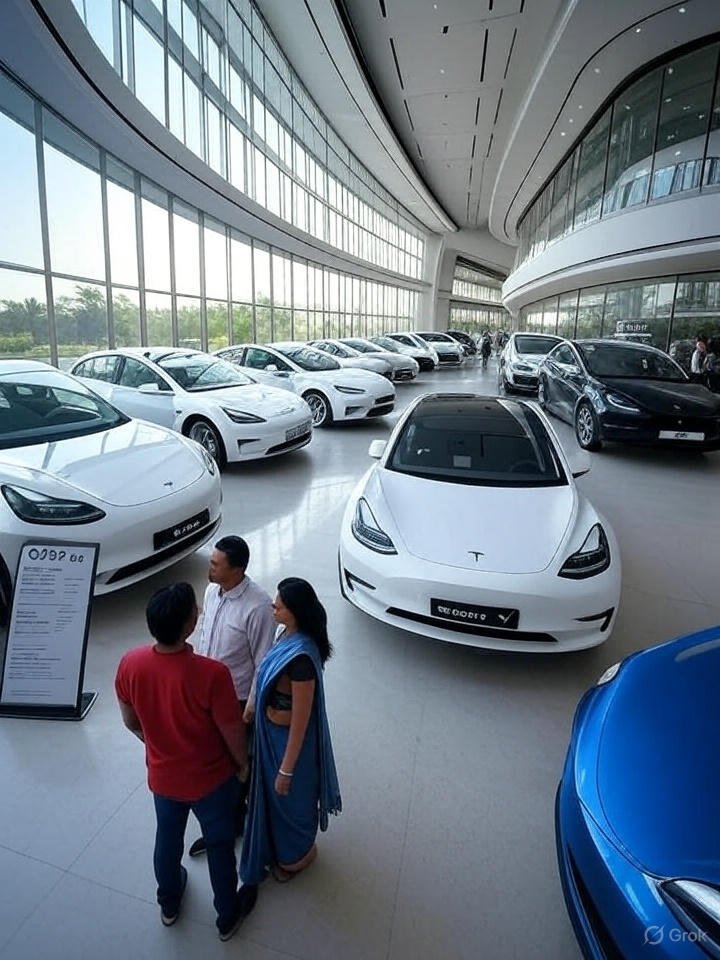
Tesla’s decision to establish its first experience center in Mumbai underscores India’s rising prominence as a key market for global corporations. The center, located in the bustling commercial hub of Bandra Kurla Complex (BKC), will serve as a flagship showroom, allowing customers to explore Tesla’s electric vehicles, including the popular Model 3 and Model Y. The facility will also feature interactive displays of Tesla’s cutting-edge battery technology and autonomous driving systems, aimed at engaging India’s tech-savvy urban population.
The move follows years of negotiations between Tesla and the Indian government, with recent policy reforms easing foreign direct investment (FDI) restrictions in the EV sector. In March 2025, the government reduced import duties on fully built electric vehicles from 100% to 15% for companies committing to local manufacturing within three years. Tesla has reportedly finalized plans to establish a manufacturing plant in Gujarat, with production expected to commence by mid-2026. This plant will cater to both domestic demand and exports to Southeast Asia, positioning India as a potential EV manufacturing hub.
Industry analysts view Tesla’s entry as a catalyst for India’s EV ecosystem. “Tesla’s presence will not only boost consumer interest but also spur competition, encouraging domestic manufacturers like Tata Motors and Mahindra to accelerate their EV portfolios,” said Rohan Sharma, an automotive analyst at Deloitte India. The company’s arrival is expected to create over 2,000 direct jobs and stimulate growth in ancillary industries, such as battery production and charging infrastructure.
Broader Market Implications
Tesla’s entry aligns with India’s ambitious target of achieving 30% EV penetration in new vehicle sales by 2030, as outlined in the National Electric Mobility Mission Plan. The government has rolled out incentives, including subsidies under the Faster Adoption and Manufacturing of Electric Vehicles (FAME) III scheme, to support EV adoption. Additionally, the establishment of over 10,000 charging stations across major cities in 2024 has addressed range anxiety, a key barrier to EV adoption.
Beyond the automotive sector, India’s market is experiencing robust growth in other areas. The technology sector continues to thrive, with Bengaluru-based startups raising $12 billion in venture capital in the first half of 2025, a 15% increase from the previous year. The renewable energy sector is also gaining traction, with India adding 18 gigawatts of solar capacity in 2024, driven by investments from companies like Adani Green Energy and ReNew Power.
Foreign investment is further bolstering India’s economic prospects. In June 2025, Apple expanded its iPhone manufacturing operations in Tamil Nadu, with Foxconn announcing a $1.5 billion investment to double its production capacity. This follows India’s emergence as a key alternative to China in global supply chains, driven by the government’s Production Linked Incentive (PLI) scheme.
Challenges and Opportunities
Despite the optimism, challenges remain. India’s EV charging infrastructure, while expanding, is still inadequate in rural and semi-urban areas. Supply chain constraints, particularly for lithium-ion batteries, could hinder Tesla’s localization plans. Moreover, competition from established players like Tata Nexon EV and MG ZS EV, which dominate the affordable EV segment, may pose pricing challenges for Tesla’s premium offerings.
However, the long-term outlook is promising. The Confederation of Indian Industry (CII) projects that India’s EV market will grow at a compound annual growth rate (CAGR) of 45% through 2030, driven by rising consumer demand and government support. Tesla’s entry is expected to accelerate this trend, while also enhancing India’s reputation as a destination for high-tech investments.
Looking Ahead
As Tesla prepares to launch its Mumbai experience center, the move signals a broader transformation in India’s market dynamics. With global giants like Tesla and Apple deepening their presence, India is positioning itself as a powerhouse in technology and sustainable innovation. The coming years will likely see increased competition, job creation, and infrastructure development, further solidifying India’s role in the global economy.
For further updates on India’s market developments or to explore specific sectors, stay tuned to leading business dailies or visit government portals like Invest India for real-time insights.
