


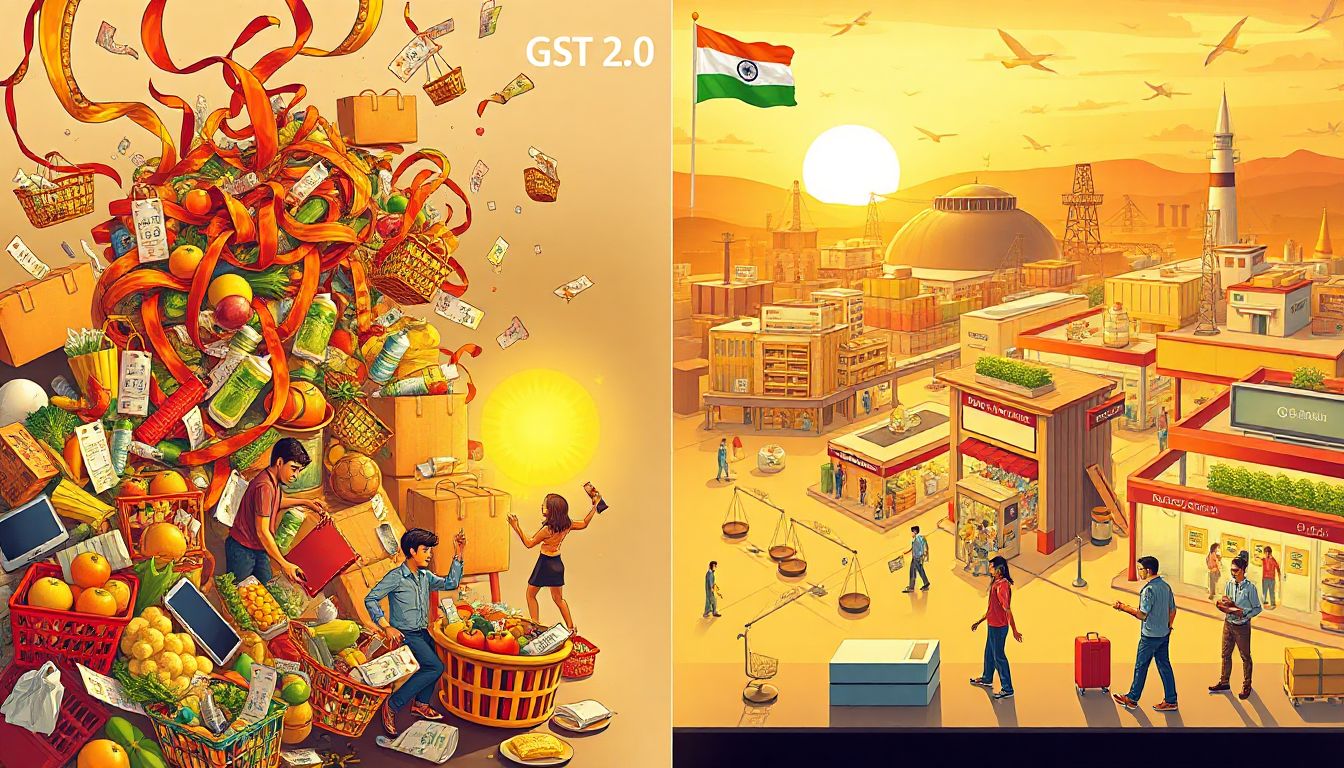
As GST 2.0 Kicks In: What Changes for Consumers and Industry?
Picture this: You’re at your local store, picking up groceries. The cashier scans your items, and the total seems a bit off—higher on some basics, lower on others. That’s the shake-up from GST 2.0 hitting everyday buys. This update to India’s Goods and Services Tax builds on the 2017 system. It aims to cut red tape and plug revenue leaks. For you as a shopper or a business owner, these shifts touch your wallet and workflow in big ways. Let’s break down what GST 2.0 means for daily life and operations.
Understanding GST 2.0: The Basics and Timeline
GST 2.0 marks a step forward in India’s tax setup. It focuses on tech tools to make filing easier and catch cheats faster. The GST Council, made up of state and central leaders, pushed these ideas to fix old flaws.
What Is GST 2.0 and Why Now?
GST 2.0 brings real-time reports and fewer tax slabs. Talks at the 53rd GST Council meeting in 2023 laid the groundwork. The goal? Stop tax dodges and make business smoother. With India’s economy growing fast, these changes help collect more without hiking rates. They target the 1.5% of GDP lost to evasion each year, per government data. You see, the old system had gaps; now, tech fills them.
Key Timeline and Implementation Phases
The rollout starts in 2024 with alerts from the finance ministry. E-invoicing kicks in for firms over Rs 5 crore turnover by April 2025. Return forms simplify in phases through 2026. Small tweaks hit retail first, then manufacturing. Businesses, check your accounting software now. Update it by late 2024 to dodge fines. This phased approach gives time to adjust.
Differences from the Original GST Framework
The first GST cut compliance time but refunds dragged on. GST 2.0 speeds those up with auto-checks. Input tax credits get tighter rules—no more fake claims. Government papers note how this fixes delays that cost firms billions. You get fewer errors in claims. Overall, it’s less hassle for honest players.
Impacts on Consumers: Everyday Changes and Benefits
These updates ripple to your shopping cart. Prices might shift, but perks like quick refunds balance it out. Think about online orders or fuel stops—GST 2.0 tweaks them all.
Price Fluctuations Across Product Categories
Essentials like rice or milk stay at 0% or 5%. Luxuries, say high-end gadgets, could drop to 12% from 18%. Council debates in 2024 eyed four slabs: 0%, 5%, 12%, 18%. This evens costs across states. Your grocery bill might dip 2-3% on average. Use free apps to spot rate changes. Scan barcodes before checkout to save a few rupees each time.
Simplified Refunds and Dispute Resolution
Now, claim overpaid taxes in days, not months. New portals auto-match invoices for credits. If a shop charges extra GST on veggies, file a quick online fix. This cuts disputes by 30%, based on pilot tests. Keep phone pics of receipts. They speed up your refund requests. You avoid long waits at tax offices.
Long-Term Effects on Affordability and Choices
Fewer cheats mean stable prices over time. Black markets shrink as formal trade booms. Economic studies show GST boosted jobs by 10% in five years. You get more options in stores. Watch budget speeches each February for rate locks. This keeps your buying power steady.
Changes for Businesses and Industry: Compliance and Operations
For owners, GST 2.0 demands tech upgrades but opens doors. Small shops and big factories both adapt. Industry groups like FICCI urge early prep to stay ahead.
Enhanced Compliance Requirements and Technology Integration
All firms above Rs 2 crore must use e-invoicing by 2025. AI tools scan returns for errors. CBIC rules spell out the steps. This cuts manual work by half. Buy GST-ready software soon. It prevents the Rs 25,000 daily fines. Your team saves hours on paperwork.
- Step 1: Link your PAN to the GST portal.
- Step 2: Test e-invoices in demo mode.
- Step 3: Train staff via free online videos.
Supply Chain and Input Tax Credit Reforms
Real-time matching stops fake credits in tracks. Suppliers upload invoices instantly; buyers verify on the spot. Logistics firms report 20% less fraud in tests. Factories in auto parts see smoother flows. Run monthly checks on vendor bills. It keeps your credits valid and cash flowing.
Opportunities for Cost Savings and Growth
Faster refunds free up cash for new hires or stock. Litigation drops as disputes resolve quicker. PwC studies predict 15% efficiency jumps. Reinvest those savings in marketing. A quick tax audit now spots hidden cuts. You grow without extra loans.
Challenges and Risks: Navigating the Transition
Shifts bring bumps. Small outfits worry about costs. But smart steps ease the pain. Government guides stress planning.
Short-Term Disruptions for Small Businesses
Switching systems means extra forms at first. Staff need training on new apps. Expect a 10-15% dip in speed early on. Join free webinars from groups like NASSCOM. They share tips to smooth the switch. Your shop stays open without chaos.
Potential for Tax Evasion and Enforcement Issues
Tougher checks mean bigger fines—up to 100% of tax due. Monitors use data to spot fakes. Past phases caught 20% more evaders. Run in-house reviews monthly. It keeps you clean from day one.
Sector-Specific Hurdles in Implementation
Real estate faces new stamp duty links. Textiles deal with fabric rate tweaks. IT services adjust for export credits. CII surveys highlight these pains. Tailor your schedule to your field. Set reminders for key dates.
Conclusion: Key Takeaways and Forward Outlook
GST 2.0 streamlines taxes but asks for change. Consumers win with clear prices and easy fixes. Businesses tackle new rules yet gain speed and savings. Stay on top via the official GST site. Chat with a tax pro for your setup. India’s tax system grows stronger, paving a solid path for all.
