


Introduction
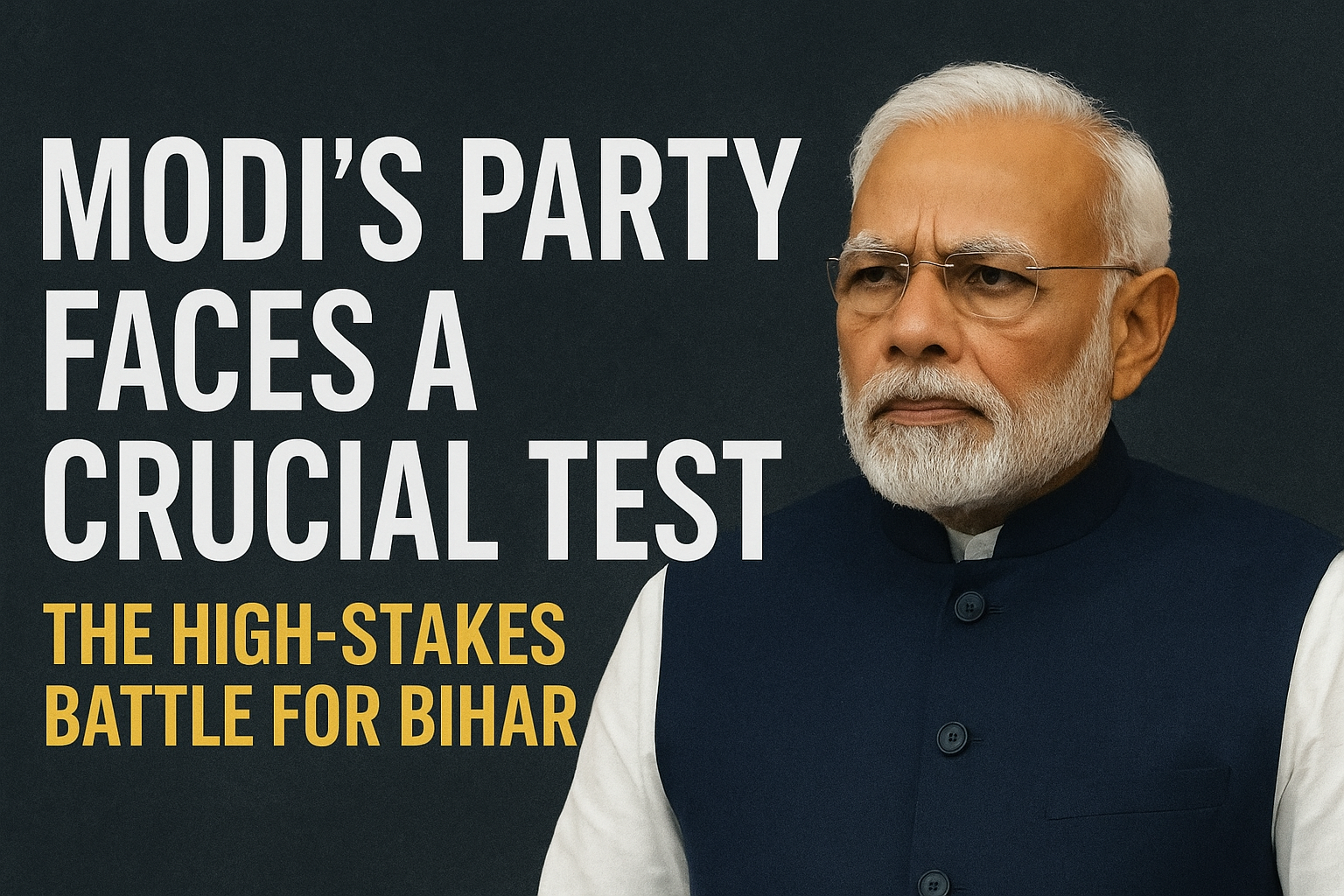
In a high-stakes electoral showdown, the Narendra Modi-led Bharatiya Janata Party (BJP) and its alliance are facing what many analysts describe as a make-or-break moment in the upcoming assembly election in the eastern Indian state of Bihar. With 243 seats up for grabs, this election is being closely watched not only for its local implications but for its potential to reshape national politics heading into the 2029 general election. AP News+2The Economic Times+2
In this blog post, we will explore why this election matters, what the key issues are, how the BJP and its rivals are positioning themselves, and what the outcome could mean for Indian politics.
Why Bihar Matters
Political significance
Bihar is one of India’s most populous states and sends 40 members to the Lok Sabha (the lower house of Parliament). The Economic Times+1 Because of this, success in Bihar carries outsized weight for any national party. A victory here gives the BJP-led National Democratic Alliance (NDA) momentum; a setback raises questions about the coalition’s strength. AP News+1
Economic and social profile
Historical context & alliances
The BJP in Bihar relies heavily on its alliance with the regional Janata Dal (United) (JD(U)), led by Nitish Kumar, rather than on forging independent dominance. Analysts note that the BJP’s independent strength remains more limited in the state compared with some others. The Washington Post+1
The Key Issues at Play
Unemployment & migration
A major concern among voters—particularly younger and male migrating workers—is the scarcity of stable local jobs. Many young people in Bihar leave the state for work in metros. This has become a potent campaign issue. The Economic Times+1
Voter-roll revision & trust in institutions
Another flashpoint: The revision of voter rolls in Bihar has seen the removal of nearly 10% of registered voters since June, according to opposition claims. The BJP and the Election Commission of India cite migration and administrative update necessity. Critics say the changes disproportionately affect poor and minority voters. AP News+1
Welfare handouts & cash transfers
The BJP alliance has used welfare transfers (for example to women) and infrastructure claims to woo voters. For example, a recent cash transfer of ₹10,000 to millions of women in Bihar has been highlighted. The Economic Times+1
Governance, law & order and regional identity
The Players: Alliances & Strategies
BJP / NDA camp
-
The BJP is contesting through its alliance with JD(U) and other local partners. The coalition emphasises continuity, and points to infrastructure, welfare programmes, and law & order improvements. The Economic Times+1
-
Strategically, the BJP is banking on welfare outreach, especially to women (who form a crucial electorate due to male out-migration), and leveraging the Modi brand, though some analysts say his central role has slightly diminished in this state context. The Washington Post+1
Opposition & new challengers
-
The main opposition alliance is led by the Rashtriya Janata Dal (RJD) and Indian National Congress (Congress), putting forward Tejashwi Yadav as a key face. Nilepost News+1
-
A new entrant is the Jan Suraaj party, founded by campaign strategist Prashant Kishor, which aims to recalibrate political dynamics in Bihar with a fresh agenda around jobs and governance reform. Reuters
What the BJP Needs to Win
-
Stable alliance performance: Given the BJP’s reliance on regional partners, the strength and cohesion of the NDA bloc in Bihar is critical. Any internal fracturing could be disastrous. Reuters+1
-
Voter outreach & addressing key issues: Promises and performance on jobs, welfare transfers and migration-impacted families will influence outcomes.
-
Managing narratives: Issues like voter list revision, transparency, and accusations of manipulation are reputational risks. The BJP must neutralise these.
-
Caste & identity politics: While BJP has built a certain consolidation among upper castes and segments, Bihar’s politics remain deeply shaped by caste dynamics. The BJP must ensure it holds or grows its support base while not alienating backward/up-ward groups.
What the Opposition Must Do
-
Beckon voters with a credible narrative of change: The opposition needs to convincingly argue that the status quo is failing—especially on jobs and governance.
-
Target segments where fatigue with the alliance may exist: Young voters, migrants, women voters and communities feeling left behind.
-
Offer alternatives beyond freebies: Given that welfare handouts are now standard fare, structural promises (job creation, land reforms, governance improvement) may carry weight.
-
Exploit vulnerabilities around trust and transparency: Issues like voter roll revision, governance backlogs, and local dissatisfaction can be focal points.
Possible Scenarios & National Implications
Scenario 1: BJP-led NDA wins decisively
Such a result would strengthen Modi’s standing ahead of 2029, reinforce his coalition, and potentially energise further state victories. It would say that despite economic and administrative headwinds, the alliance retains electoral strength.
Scenario 2: Narrow win or stalemate for NDA
This would signal vulnerability. A win without dominance may raise internal questions within the coalition, dampen momentum, and embolden the opposition.
Scenario 3: Opposition surge and NDA setback
A strong swing against the BJP alliance in Bihar would have ripple effects: it could reshape alliance maths, encourage similar challenges in other states, and indicate broader disillusionment among key voter blocs. Analysts say such an outcome could unsettle Modi’s broader coalition. AP News+1
Challenges and Limitations
-
Economic constraints: While promises abound, the economic conditions in Bihar (per-capita income low, high migration, structural unemployment) pose real limits to what can be delivered. The Washington Post+1
-
Electoral volatility: Indian state elections increasingly feature fractured mandates, new players, and unpredictable swings. Opinion polls remain unreliable. The Economic Times
-
Local vs national narratives: The BJP may emphasise national leadership and brand image, but local issues dominate in Bihar. Candidates and local alliances matter.
-
Caste and identity dynamics: These remain fluid and difficult to quantify, meaning traditional assumptions may not always hold.
What to Watch On Polling Day
-
Turnout in key constituencies, especially urban vs rural, male vs female participation.
-
Performance of women-centric outreach campaigns (given male migration).
-
Vote swings in districts with high out-migration or socio-economic distress.
-
Exit polls and early trends (though with caution, given past inaccuracies).
-
Post-poll alliance manoeuvres—if no clear majority emerges, backroom politics could shape the result.
Conclusion
The Bihar election is far more than a state poll. For Narendra Modi’s BJP alliance, it is a vital litmus test of dominance, narrative strength, alliance cohesion and voter sentiment. The opposition sees it as a chance to reset the political equation. The outcome may well influence not only governance in Bihar but the shape of Indian national politics over the next few years.
Whatever the result, the story it tells about Indian democracy, regional dynamics and electoral behaviour will be instructive for political watchers and voters alike.
