


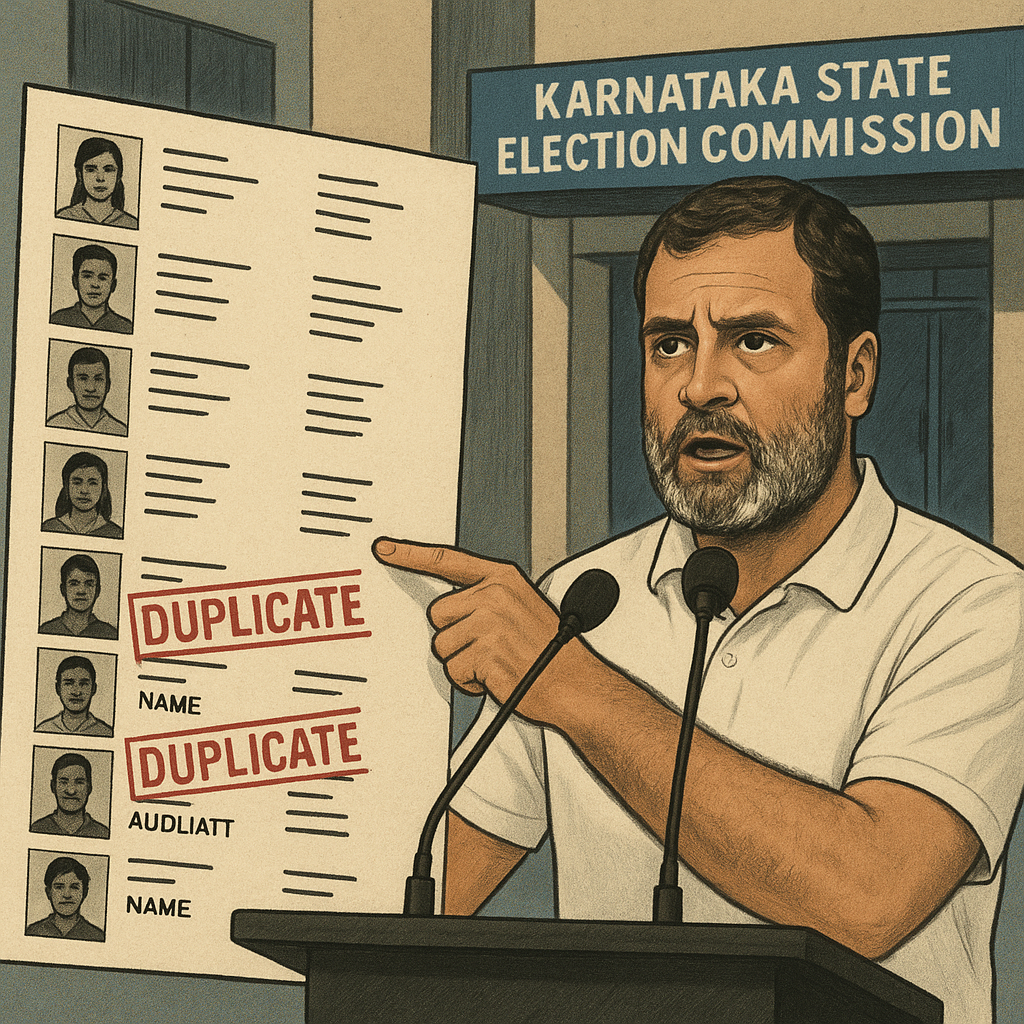
Rahul Gandhi Alleges Massive Fraud in Karnataka Voter Rolls: Duplicate Entries & Fake Addresses Exposed
Rahul Gandhi, a leading figure in India’s Congress party, has made serious claims about the Karnataka voter rolls. He states there’s widespread fraud, pointing to many duplicate voters and fake addresses. These accusations shake the very core of our democratic system. They suggest that the list of people eligible to vote is deeply flawed.
Such problems could greatly change election results. When voter lists are not clean, public trust in elections suffers. This issue comes up as Karnataka prepares for important polls. What happens if people lose faith in the voting system? It can harm democracy itself.
This article will look closely at these claims. We will check out the evidence presented and see how the Election Commission of India (ECI) might respond. We will also consider what these allegations mean for future elections in the country.
Examining the Specific Allegations of Fraud
Duplicate Voter Registrations
Duplicate voter registration happens when the same person is listed more than once. They might be on the rolls at different homes or even twice at the same address. This creates a chance for one person to vote multiple times. Such errors can skew election results significantly.
Rahul Gandhi and the Congress party have shown some voter ID numbers. They claim these are proof of duplicate entries. These patterns, they say, point to a larger issue, not just a few mistakes. The sheer number of such entries raises flags.
Why would someone want duplicate registrations? It’s simple: to cast extra votes. Each duplicate entry could become another vote for a certain candidate or party. This makes it easier to rig an election without anyone knowing right away.
The Issue of “Fake” or “Ghost” Addresses
“Fake” or “ghost” addresses refer to places listed on voter rolls where no one actually lives. These could be non-existent buildings, empty plots, or even homes where the registered voter does not reside. Sometimes, many voters are all listed at one single, small address.
Gandhi’s team has highlighted specific examples of these problematic addresses. They’ve shown lists where dozens, even hundreds, of voters are linked to a single, unlikely location. This data, they argue, is clear evidence of a planned effort.
Using fake addresses helps voter fraud in a big way. It allows people to register who do not live in the area, or even people who don’t exist. These “ghost” voters can then be used to cast ballots, making it hard to track real voters from fake ones.
The Election Commission of India’s Role and Response
Process of Voter Roll Updating and Verification
The Election Commission of India (ECI) has clear rules for keeping voter lists current. They add new voters, remove those who have passed away or moved, and check existing details. This job is ongoing, aimed at making sure lists are correct.
The ECI uses various tools to keep voter rolls accurate. They use software to spot duplicate entries and cross-check data. They also use field visits to confirm addresses and voter details.
In the past, the ECI has run clean-up drives. These campaigns aim to fix errors and remove bogus entries. They want to ensure fair elections by having the most accurate lists possible.
ECI’s Initial Reaction and Investigation
The Election Commission has acknowledged Rahul Gandhi’s claims. They have stated that they are taking these allegations seriously. Public trust in the electoral system is very important to them.
Reports suggest the ECI has started an investigation into the claims. They are looking into the specific voter ID numbers and addresses provided. We hope for a quick and thorough review.
The ECI often shares updates on its findings. They aim for transparency in this process. How they handle this issue will affect how people view the integrity of future elections.
Political Ramifications and Opposition Responses
Congress Party’s Stance and Demands
The Congress party plans to share even more proof. They say they have detailed reports of how voter lists are being misused. This evidence will back up their claims of widespread fraud.
The party has made specific demands to the ECI. They want a full audit of the voter rolls in Karnataka. They are also asking for all suspect entries to be deleted right away. Some even suggest delaying elections until the lists are clean.
This isn’t the first time Congress has raised concerns about election fairness. They have often spoken about issues with voter lists and election processes in past polls. This history shapes their current strong stand.
Reactions from Other Political Parties and Analysts
Other political parties have responded in different ways. Some opposition groups support Gandhi’s claims, calling for action. Others, especially the ruling party, have dismissed the allegations. They say the claims are baseless and meant to create doubt.
Experts who study elections have shared their views. Some say the claims need a deep look, as voter integrity is key to democracy. Others caution against making broad claims without solid proof. They ask for a fair and open investigation.
These allegations could greatly affect how people feel about elections. If voters believe the lists are rigged, they might lose faith in the entire process. This can lead to lower turnout and a feeling that their vote doesn’t count.
Ensuring Electoral Integrity: Lessons and Solutions
Best Practices for Voter Roll Management
Regularly checking voter data is crucial. This means doing full data audits of electoral rolls often. Such checks can catch errors and fake entries before they cause problems.
Using modern technology can make voter list management better. Artificial intelligence and blockchain could help spot odd patterns. These tools can improve how voter lists are kept safe and accurate.
Cross-checking voter data with other government records is also important. Comparing lists with population records or even death certificates helps keep them clean. This makes sure only eligible people are on the rolls.
Voter Awareness and Citizen Participation
Empowering citizens to help is a big step. Voters should know how to check their own details and report any mistakes they find. Simple tools to report issues can make a difference.
Civil society groups play a vital part. They can push for better election rules and watch over the process. These groups help ensure fairness and protect voters’ rights.
Teaching people about their voting rights and the election process is key. When citizens understand how things work, they can better spot problems. An informed public is the best guard against fraud.
Conclusion: The Path Forward for Electoral Credibility
Rahul Gandhi’s claims about duplicate voters and fake addresses in Karnataka’s voter rolls are very serious. They highlight a potential weakness in the electoral system. A clean and accurate voter list is the backbone of any fair democracy.
The Election Commission of India’s response is now vital. They must show they can handle these claims with speed and openness. How they investigate and fix any problems will define public trust.
We must remain vigilant and push for reforms. Safeguarding electoral integrity in India is not just the ECI’s job. It is a shared duty for all citizens, political parties, and civil society groups.
Rahul Gandhi, Karnataka, voter rolls, election fraud, duplicate entries, fake addresses, voter ID scam, electoral malpractice, Indian politics, Congress party, BJP, Karnataka elections, voter list irregularities, democracy in India, election commission, political scandal, voter suppression, fraud investigation, electoral fraud, political controversy, Indian elections, voter rights, Rahul Gandhi news, Karnataka politics, election reform, democracy watchdog, voter registration issues
